Yemen Health Surveillance & HeRAMS Dashboards Telemetry
Technical documentation of district-level COVID-19 surveillance feeds, HeRAMS facility capacity indicators, and humanitarian dashboard embedding architecture across Yemen.
1. Core Humanitarian Surveillance Data Streams
Operational coordination in Yemen depends on stitching together decentralized health cluster reports that update on mismatched cadences across fragmented northern and southern administrative authorities. During the 2020 pandemic surge, UN OCHA Yemen Humanitarian Fund (YHF) strategy papers and UN Security Council Panel of Experts filings relied on consolidated sub-national dashboards to track hospital bed occupancy, isolation center readiness, and oxygen concentrator deployment across all 22 governorates.
Unlike peacetime national health ministries operating unified electronic medical record backbones, humanitarian health dashboards in protracted crises must reconcile overlapping reporting boundaries using standardized OCHA Common Operational Dataset (COD) administrative P-Codes at Admin-1 (22 governorates) and Admin-2 (333 districts) levels. Whenever a district health office loses satellite, cellular, or grid electricity connectivity, missing weekly tallies must be flagged explicitly as non-reporting rather than rendered as zero disease incidence—a critical methodological safeguard highlighted in WHO routine health service monitoring guidance.
To prevent distorted resource allocation, analytical dashboards separate facility structural inventory (beds, solar arrays, laboratory centrifuges) from dynamic consumable stockouts (liquid oxygen cylinders, PPE, insulin vials, and rapid antigen cartridges). A hospital may report intact physical wards in HeRAMS while simultaneously suspending acute respiratory triage for ten days due to diesel generator rationing or checkpoint clearance holds on medical gas cylinders.
| Data Stream | Primary Granularity | Update Cadence | Key Failure Mode in Conflict Zones |
|---|---|---|---|
| eDEWS Syndromic Alerts | Sentinel Facility / Admin-2 | Weekly | SMS/internet blackout delays zero-reporting distinction |
| HeRAMS Functionality | Individual Facility (5,056 nodes) | Semi-Annual / Rolling | Fuel & staff turnover rapidly alters partial status |
| YHF Allocation Ledger | Cluster Project / District | Allocation Cycle | Cross-line procurement clearance stalls implementation |
| Cold-Chain & SDD Inventory | District Cold Store | Monthly / 30DTR Log | Sensor battery failure masks 2-8 C excursion events |
| Oxygen & Isolation Bed Census | Referral Hospital (45+ Hubs) | Daily / Bi-Weekly | Under-counted community mortality outside referral wards |
2. Dashboard Embed & Bandwidth Resilience
Field humanitarian coordinators in Sana'a, Aden, Taiz, and Ma'rib frequently access GIS and Power BI dashboards over congested 3G networks or high-latency VSAT links. Historical developer documentation noted that embedded analytical portals failed fullscreen transitions when host HTML layout tables omitted allowfullscreen="true" attributes inside responsive wrappers, or when heavy third-party script bundles stalled page hydration on older mobile hardware.
Furthermore, embedding live external BI frames without a static semantic HTML fallback leaves researchers and UN situation-report editors with blank containers whenever upstream cloud workspaces rotate keys or sunset legacy reports. Modern field-ready health dashboards decouple core quantitative matrices—rendered immediately in lightweight Booktabs HTML tables—from interactive browser-side diagnostic sandboxes, ensuring governorate readiness indicators remain readable at sub-megabit speeds.
3. Reporting Completeness & Essential Health Service Tracking
During the 2020–2021 emergency period documented by WHO and PAHO routine-data analysts, monitoring absolute COVID-19 admissions proved insufficient without parallel tracking of collateral disruptions across routine maternal-child healthcare. Dashboards tracked five tracer indicators: antenatal care fourth visits (ANC4), facility-based deliveries, pentavalent DTP3 immunization doses, outpatient consultations for children under five, and emergency trauma surgical capacity.
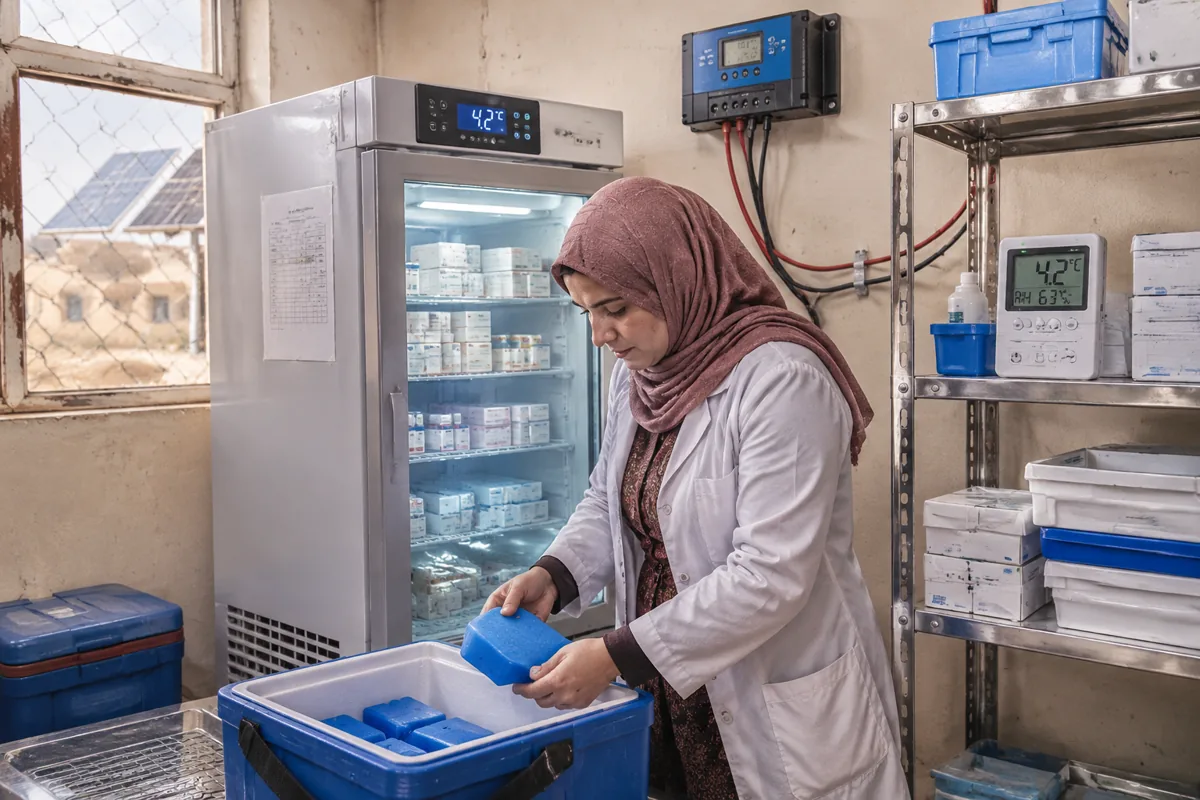
Where district security incidents severed fuel deliveries to cold stores, immunization drop-offs appeared in monthly dashboard denominators weeks before localized measles or diphtheria alerts registered in eDEWS. Pairing district cold-chain holdover analytics with routine service completeness ratios enables humanitarian logistics teams to dispatch solar direct-drive (SDD) battery banks and passive vaccine carriers preemptively.
4. International Policy & Scientific Citations
Verified institutional citations referencing the historical Yemen dashboard portals include the UN Security Council S/2021/79 report (Footnote 111), the UN OCHA YHF 2nd Reserve Allocation Strategy Paper (Footnote 1, noting that only half of Yemen's health facilities remained functional during emergency escalation), the WHO EMRO Stakeholder Engagement Plan (P176827), and the WHO routine health data monitoring manual alongside its PAHO Portuguese and Spanish editions.
5. District Dashboard Quality-Audit Checklist & Archived Modules
Operational teams reviewing historical Yemen health dashboard exports must verify four primary validation gates before citing indicator trends in grant allocations or peer-reviewed manuscripts. First, confirm the denominator baseline: HeRAMS facility availability percentages shift substantially when temporary mobile clinics are counted alongside fixed district hospitals, so historical exports always separate fixed public facilities from emergency outreach units. Second, reconcile week-numbering conventions between the electronic Disease Early Warning System (eDEWS) epidemiological Sunday-start calendar and ISO 8601 weekly reporting tables used by multilateral supply-chain partners.
Third, inspect missingness masks at the governorate-district boundary level. During periods of acute fiber disruption or localized conflict in Al Jawf, Sa'dah, or Marib, silent district polygons previously rendered as zero-incidence zones in unpatched Power BI choropleths, creating false impressions of epidemic control. The reconstructed archive isolates non-reporting districts using hatched cartographic masks and flags delayed weekly bulletins separately from true zero-case surveillance reports. Fourth, preserve provenance tags linking each district metric back to its originating situation report, whether WHO Yemen Situation Report snapshots, OCHA Humanitarian Response Plan indicators, or governorate logistics registries. Maintaining these four verification steps ensures secondary policy researchers avoid conflating data-pipeline latency with genuine shifts in morbidity, case fatality, or maternal care capacity across governorates.
Archival Citation Context: yemen.immap-mena.info/WHO/covid19_yemen/ (UNSC S/2021/79, UN OCHA YHF, WHO IRIS)
Legacy URL Preserved: https://yemen.immap-mena.info/WHO/covid19_yemen/
Preserves continuity for footnote citations in UN Security Council document S/2021/79, UN OCHA Yemen Humanitarian Fund allocation paper YEM-AllocDocs_2020_285_269.pdf, and WHO/PAHO routine essential-service monitoring manuals (2020–2021). Original emergency isolation, WASH, oxygen, and healthcare worker dashboard categories are documented above with modern P-Code normalization standards.
Archival Citation Context: yemen.immap-mena.info/yemen-dashboards/ & KhetamPDFButton.html (Microsoft Fabric Community)
Legacy URLs Preserved: https://yemen.immap-mena.info/yemen-dashboards/ and /KhetamPDFButton.html
Referenced in Microsoft Fabric / Power BI developer documentation regarding responsive allowfullscreen="true" iFrame embedding for Yemen humanitarian dashboards, as well as the WHO EMRO Stakeholder Engagement Plan (P176827). Unmapped legacy subpaths under yemen.immap-mena.info also resolve cleanly to this archival index.
Archival Citation Context: yemen.immap-mena.info/WHO/ Directory Index
Legacy URL Preserved: https://yemen.immap-mena.info/WHO/
Former directory index linking to Yemen WHO emergency information products (2020–2023). Maintained on this independent observatory with explicit non-impersonation notice on /about/#historical-disclosure.